.jpeg)
Category : UPSC / STATE PCS
Antarctic Ozone Hole
Antarctic Ozone Hole is a seasonal and severe thinning of Stratospheric Ozone over Antarctic mostly from August to November during spring season in Southern Hemisphere.
Copernicus, European Earth Observatory Agency said that this year the Ozone Hole over Antarctic had formed in August and was completely healed by December 1, 2025.
It picked at just over 21 million sq.km. (well below 2006 record). Scientists credit this achievement on the global ban on Ozone Depleting substances. This early closure offers a rare environment Bright spot during a year of record heat.
Causes of Antarctic Ozone Hole –
- Ozone Depleting substances.
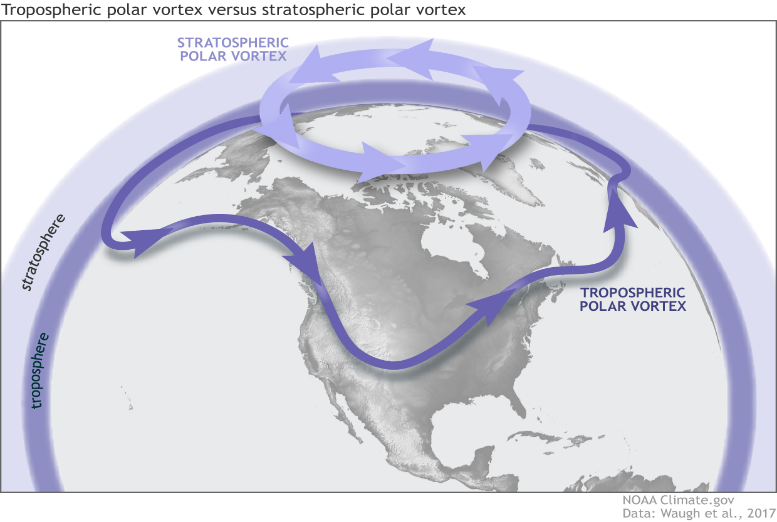
- Meteorological drivers such as Polar Vortex, Polar Stratospheric Clouds.
- Return of sunlight in Spring.
- Climate Change and Global warming.
- Aerosols from Wildfires.
Effects of Ozone Layer Depletion –
- On Human Health – It causes skin cancers, weaken immunity and cataracts due to harmful UVA & UVB.
- On Plants – It affects physiological and developmental process in plants.
- On Marine Life – Loss of lives of phytoplankton & other marine animals.
- On Ecosystem – It affects Terrestarial and Aquatic Biogeochemical Cycles.
Treaties for Protection of Ozone Layer –
- Montreal Protocol, 1987 -
- Vienna Convention, 1985
- Kigali Amendment to Montreal Protocol, 2016
(Q)What are ozone depleting substances and how they deplete ozone layer ?
Some compounds when they get exposed to UV light release bromine & chlorine, these chemicals react with ozone and as a result destroy ozone molecule. Examples of Ozone Depleting substances are chlorofluorocarbons (CFCs), hydroclorofluorocarbons (HCFCs)